
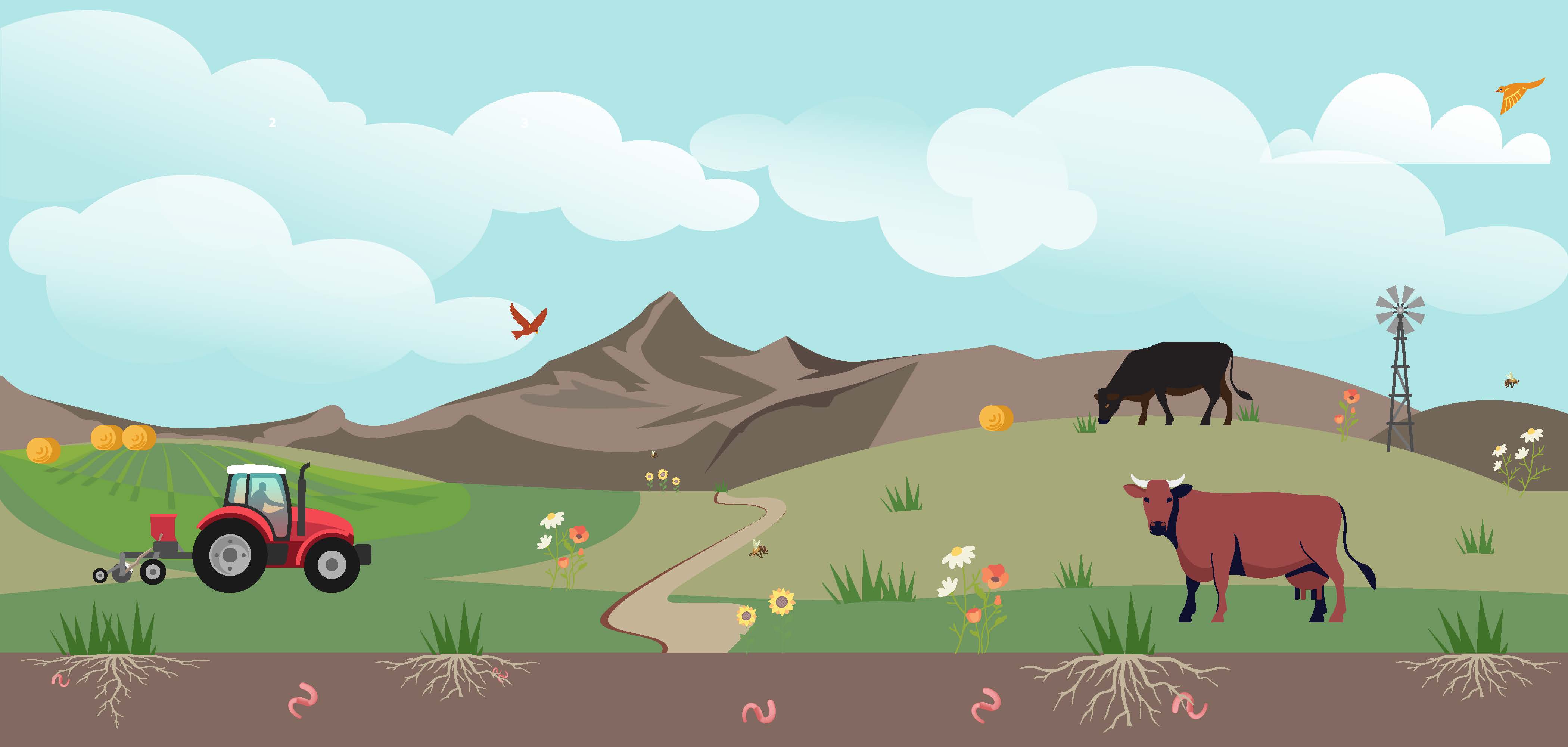
The 5 soil health principles are guidelines that anyone can follow to improve their soil health, whether in a backyard garden in Albuquerque or a large cattle ranch in Zuni. Below explains the 5 soil health principles, which are part of the state law that created NMDA’s Healthy Soil Program.
1. Keep soil covered.
Keeping soil covered with plants or other organic matter (fallen leaves, mulch, etc.) is one of the best things we can do for soil health. That’s because bare ground is susceptible to soil erosion, soil compaction, and takeover by noxious weeds. Bare ground also often gets much, much hotter than ground that is covered, and high soil temperatures can have a negative impact on the many micro-organisms beneath the soil’s surface. That’s worth noting, because these subsurface organisms cycle the nutrients that plants use.
2. Minimize soil disturbance on cropland and minimize external inputs.
What does “soil disturbance on cropland” mean? In a word, tillage. Minimizing tillage minimizes soil compaction, erosion by wind and water, and the potential for weeds to move in. Fewer external inputs means fewer disruptions in the natural cycles involving soil, plants, and animals large and small. Applying fewer external inputs can often mean that farmers, ranchers, and other land managers save both money and time.
3. Maximize biodiversity.
Maximizing biodiversity means maximizing the number and kind of beneficial plants and animals on
the land. A greater variety of plants and animals above ground means a greater variety of life below ground, too. All of that diverse life translates into diverse nutrients cycling back and forth from the soil, to the plants, to the animals, and to our plates.
4. Maintain a living root.
While keeping soil covered with organic matter like fallen leaves or mulch is good, keeping the soil covered with living plants is even better. Through the process of photosynthesis, living plants “harvest” the sun’s energy and store it as carbon-based chemical energy. A portion of that carbon leaves plants’ roots, offering a liquid feast to the many microorganisms living in the soil. When these microorganisms are well fed, they can do their small but crucial work of making nutrients available to plants.
5. Integrate animals into land management, including grazing animals, birds, beneficial insects or keystone species, such as earthworms.
Animals of all sizes fertilize soil through their waste. Grazing animals like livestock and wildlife stimulate plant growth when they graze. These large animals also work seeds and nutrients into the soil as they move. Small animals above ground help pollinate plants, while small animals below ground create spaces within the soil, allowing water and nutrients to reach plant roots more easily.